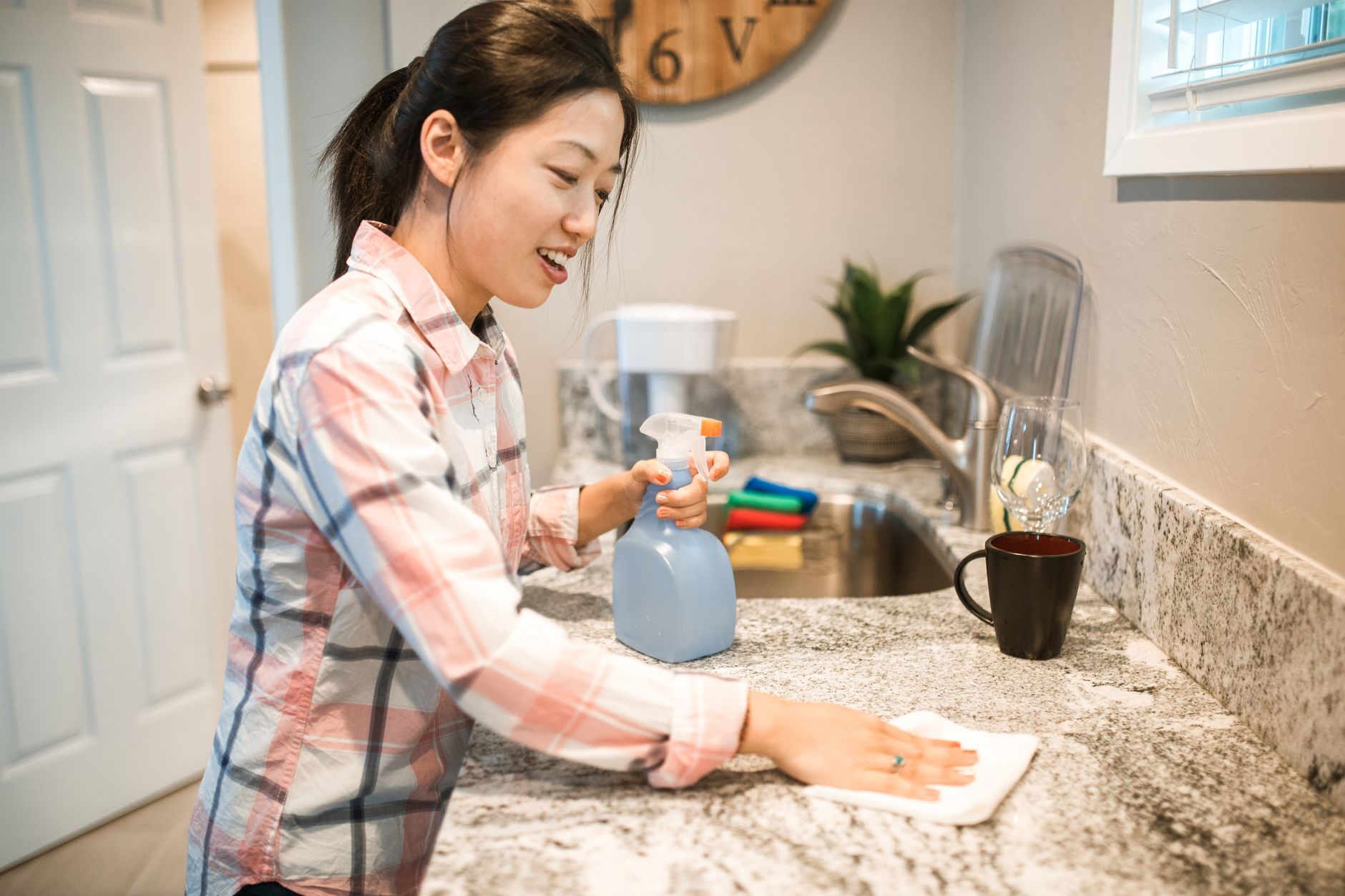
Your granite countertops are a stunning addition to your kitchen, bringing both beauty and value.
But maintaining that lustrous shine can feel like a constant battle, especially with the array of commercial cleaners on the market, many of which come with a cocktail of harsh chemicals.
What if you could achieve that sparkling finish using simple, safe, and cost-effective ingredients you already have at home? This article will guide you through creating your own DIY granite cleaners, proving that a pristine kitchen doesn’t require sacrificing your health or the environment.
Table of Contents
Why Choose DIY Granite Cleaners?
Opting for natural and DIY cleaning solutions for your granite countertops offers a multitude of benefits.
Firstly, it significantly reduces your exposure to potentially harmful chemicals.
Many commercial cleaners contain acids, alkalis, or abrasive agents that can, over time, degrade the sealant and even etch the surface of your granite, leading to dullness and susceptibility to stains.
DIY cleaners, on the other hand, utilize the power of common household ingredients that are much gentler.
This gentleness preserves the integrity of your granite’s sealant, ensuring its long-lasting beauty and protection.
Save this post for later 📩
Not ready to read it all now? Send it to yourself and come back whenever you're ready.
Moreover, these recipes are incredibly cost-effective.
Instead of shelling out for specialized granite cleaners, you can make effective solutions for pennies using items already in your pantry.
Beyond the financial and practical advantages, embracing DIY cleaning is a step towards a more environmentally friendly home.
You’re reducing the amount of plastic packaging waste and the release of volatile organic compounds (VOCs) into your air.
This also makes your cleaning routine safer for children and pets who might come into contact with the surfaces.
Understanding Granite and Its Care
Granite is a natural igneous rock formed from molten magma.
It’s known for its durability and unique, beautiful patterns.
However, granite is also a porous material.
This means it has tiny, microscopic pores that can absorb liquids if not properly sealed.
This absorption can lead to staining, especially from colored liquids like wine, coffee, or oil.
This is where sealing comes in.
Granite countertops are typically sealed during installation and should be resealed periodically (usually every 1-3 years, depending on usage and the type of sealant).
A well-sealed countertop will resist stains more effectively.
When water is spilled on sealed granite, it should bead up on the surface rather than soaking in.
Because of its natural composition and porous nature, it’s crucial to avoid certain cleaning agents.
Highly acidic cleaners like undiluted vinegar or lemon juice, or abrasive cleaners such as scouring powders or steel wool, can damage the sealant and even etch the granite’s surface.
This is why choosing the right cleaning solution is paramount for maintaining your granite’s pristine condition.
Gentle All-Purpose Granite Cleaner with Dish Soap
For your everyday cleaning needs, a simple solution with mild dish soap is remarkably effective.
This recipe is designed to tackle daily spills and light grime without stripping away the protective sealant.
Mild dish soap is a fantastic degreaser, breaking down oils and food residues easily.
The key here is using just a small amount of soap.
Too much can leave a residue that dulls the shine.
This creates a gentle yet effective cleaner that keeps your countertops sparkling without any harsh chemicals.
Step-by-Step Instructions
- Gather your ingredients: a few drops of mild liquid dish soap (like Dawn or similar), warm water, and a clean spray bottle.
- Fill the spray bottle with approximately 2 cups of warm water. The warmth helps to dissolve any residues better.
- Add just a few drops of mild dish soap to the water. Less is more to avoid a streaky finish.
- Gently swirl or rock the bottle to mix the solution. Avoid vigorous shaking, which can create excess foam.
- Lightly spray the solution onto your granite surface, focusing on areas with spills or grime.
- Wipe the surface clean with a soft, microfiber cloth. Microfiber is excellent for trapping dirt and preventing scratches.
- Immediately buff dry with a separate clean, dry microfiber cloth. This step is crucial for achieving a brilliant, streak-free shine.
Streak-Free Granite Cleaner with Vinegar
For those moments when you desire an extra sparkle or are dealing with slightly tougher residue, a diluted vinegar solution can be your go-to.
Vinegar’s natural acidity helps cut through grease and can leave a streak-free finish.
However, it’s crucial to use it correctly due to its acidic nature.
The trick to using vinegar safely on granite is thorough dilution and prompt drying.
By mixing it with water, you reduce its acidity to a level that is generally safe for sealed granite.
Save this post for later 📩
Not ready to read it all now? Send it to yourself and come back whenever you're ready.
Wiping and drying immediately minimizes the contact time, preventing any potential etching of the sealant.
This recipe is ideal for a deeper clean and a noticeable shine boost.
Step-by-Step Instructions
- Gather your ingredients: distilled white vinegar, water, and a clean spray bottle.
- Mix equal parts distilled white vinegar and water in your spray bottle. For instance, combine 1 cup of distilled white vinegar with 1 cup of water.
- Shake the bottle gently to ensure the ingredients are well combined.
- Lightly spray the granite surface. Avoid over-saturating the stone.
- Immediately wipe the surface clean with a damp microfiber cloth.
- Follow up by drying and buffing thoroughly with a clean, dry microfiber cloth. This step is essential to prevent streaks and to remove any residual acidity.
Natural Granite Polish with Rubbing Alcohol
To achieve a truly professional-level shine and add a sanitizing element to your cleaning routine, rubbing alcohol is an excellent ingredient.
It evaporates quickly, which means it’s less likely to leave water spots and can help your countertops gleam.
Rubbing alcohol (isopropyl alcohol) is effective at cutting through residue and provides a streak-free finish.
Its quick evaporation rate makes it ideal for polishing granite to a high shine.
Use a concentration of 70% for the best results.
Step-by-Step Instructions
- Gather your ingredients: isopropyl alcohol (70% concentration is recommended), distilled water, and a clean spray bottle.
- In your spray bottle, mix one part isopropyl alcohol with three parts distilled water. For example, use 1/4 cup of rubbing alcohol and 3/4 cup of distilled water.
- Shake the bottle gently to mix the solution thoroughly.
- Lightly spray the solution onto the granite surface or, for a more controlled application, spray it directly onto a clean microfiber cloth.
- Wipe the granite clean with the dampened cloth, ensuring you cover the entire surface.
- Immediately buff the area with a dry microfiber cloth until the granite is completely dry and has a brilliant shine.
Deep Cleaning Granite Stain Remover (Baking Soda Paste)
Granite countertops can sometimes fall victim to stubborn stains, whether from oily residues or water marks.
For these tougher challenges, a baking soda paste is a gentle yet effective stain remover that works by drawing the stain out of the stone.
Baking soda is a mild alkali and a fine abrasive that, when made into a paste, can lift stains without scratching the granite.
It’s particularly effective for oil-based stains.
For water-based stains, a little hydrogen peroxide can boost its power.
Step-by-Step Instructions
- Gather your ingredients: baking soda, water, plastic wrap, and painter’s tape.
- For oil-based stains: Mix baking soda with just enough water to create a thick paste with the consistency of peanut butter. It should be spreadable but not runny.
- For water-based stains: You can use the baking soda and water paste. For more stubborn water stains or organic stains, mix baking soda with a few drops of hydrogen peroxide to form the paste.
- Apply the paste generously and directly onto the stain, ensuring the entire stained area is covered with a thick layer.
- Cover the paste with plastic wrap and secure the edges with painter’s tape. This seals the paste, allowing it to work effectively.
- Allow the paste to dry completely. This process can take anywhere from 24 to 48 hours, depending on the humidity and the size of the stain.
- Once the paste is completely dry and brittle, carefully remove the painter’s tape and the plastic wrap.
- Gently scrape away the dried baking soda paste using a plastic spatula or a credit card. Avoid using metal, which could scratch.
- Wipe the area clean with a damp cloth and then dry thoroughly with a clean microfiber cloth. Inspect the area for any remaining stain; you may need to repeat the process for very stubborn marks.
Essential Tips for Granite Countertop Care
Maintaining the beauty of your granite countertops goes beyond just cleaning.
Regular sealing is your first line of defense against stains.
A water test—dropping a small amount of water on the surface and seeing if it beads up—can tell you if it’s time to reseal.
Always clean up spills immediately, especially acidic liquids like wine, juice, or coffee, and oily substances.
The longer they sit, the more likely they are to penetrate the stone.
Save this post for later 📩
Not ready to read it all now? Send it to yourself and come back whenever you're ready.
When cleaning, always use soft cloths and avoid abrasive sponges or scouring pads that can scratch the surface.
Even though granite is hard, its sealant can be damaged.
Use coasters for glasses, especially those containing alcohol or acidic beverages, and always use trivets or hot pads under hot pots and pans to prevent thermal shock, which can cause cracks.
Before applying any new DIY cleaner to your entire countertop, it’s wise to test it on an inconspicuous area.
This might be a corner that’s usually hidden or under an appliance.
This simple step ensures the cleaner won’t discolor or damage your granite.
Conclusion
You’ve seen how simple, effective, and safe DIY granite cleaners can be.
By harnessing the power of everyday ingredients like dish soap, vinegar, rubbing alcohol, and baking soda, you can keep your granite countertops looking their absolute best without resorting to harsh chemicals.
Achieving sparkling granite countertops is not only achievable but also a rewarding process that benefits your home’s health and your wallet.
These homemade recipes offer a gentle yet powerful approach to cleaning and maintaining the natural beauty of your kitchen.
So, embrace these easy-to-follow recipes and enjoy the satisfaction of a beautifully maintained, chemical-free kitchen.
Your granite will thank you for it!.
Have you tried any of these DIY granite cleaner recipes? What are your favorite homemade cleaning solutions? Share your experiences and tips in the comments below!.