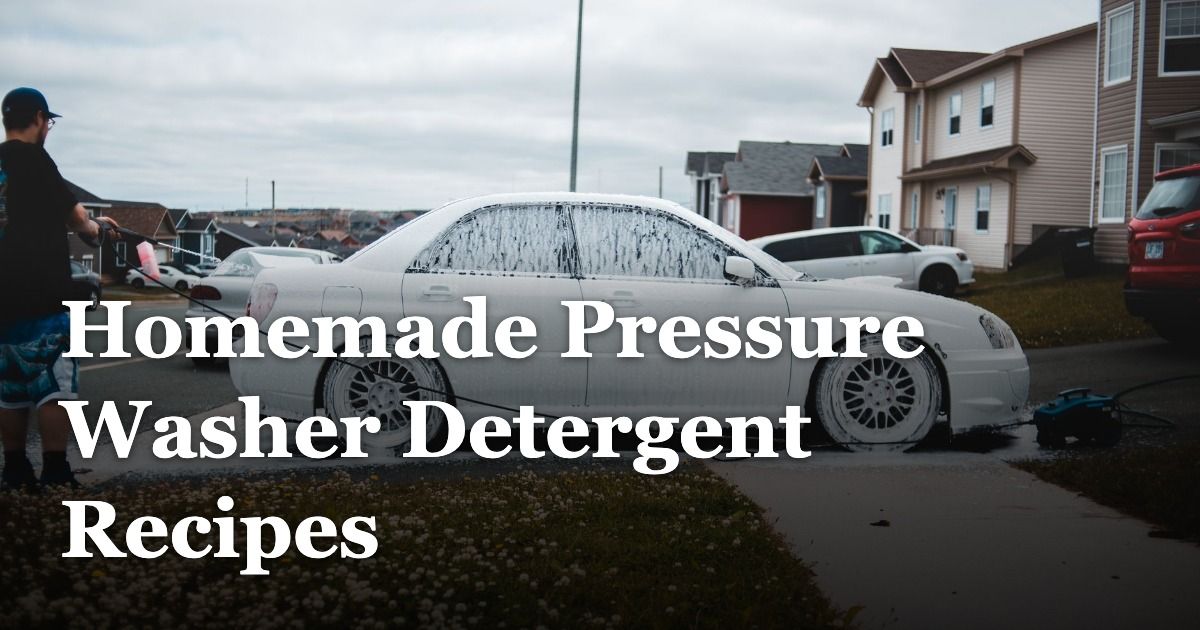
Transforming your dirty exterior surfaces can be a satisfying task, and a pressure washer is an indispensable tool for achieving that sparkling clean.
While commercial detergents are readily available, have you ever considered the benefits of crafting your own? Homemade pressure washer detergents offer a compelling alternative, providing cost-effectiveness, greater control over ingredients, and a more environmentally friendly approach to cleaning.
From grimy driveways and weathered siding to dusty vehicles and streaky decks, the right detergent can elevate your pressure washing results.
In this comprehensive guide, you’ll discover how to create effective homemade detergents tailored to various cleaning needs, understand the safety precautions necessary, and learn the best practices for using them with your pressure washer.
Get ready to unlock a cleaner home and a happier planet, one homemade solution at a time!.
Table of Contents
Understanding Pressure Washer Detergents
At its core, the purpose of a detergent in pressure washing is to act as a cleaning catalyst.
It works by lifting embedded dirt, emulsifying stubborn grease and oil, and effectively breaking down grime and other stubborn stains.
Without a detergent, water alone might struggle to penetrate and loosen these persistent contaminants.
Save this post for later 📩
Not ready to read it all now? Send it to yourself and come back whenever you're ready.
Diverse surfaces can benefit from the power of a pressure washer.
These include, but are not limited to: vinyl and wood siding, concrete driveways and patios, wooden decks and fences, brickwork and stone facades, and of course, vehicles of all kinds.
Each of these surfaces has unique characteristics that dictate the type of cleaning solution they can safely tolerate.
This is precisely why using the right type of detergent is paramount.
A detergent too harsh for a delicate surface like a painted wooden deck can lead to peeling paint, wood damage, or discoloration.
Conversely, a detergent that’s too mild might not be effective on a heavily soiled concrete driveway.
While commercial detergents are convenient, they can sometimes contain harsh chemicals that pose risks to both the environment and your health.
Furthermore, the ongoing cost of purchasing these specialized cleaners can add up.
Understanding the basics of detergent action allows you to make informed choices for your cleaning projects.
Safety First: Precautions for Homemade Detergents
Before diving into any cleaning project with homemade solutions, prioritizing safety is non-negotiable.
Always wear appropriate protective gear.
This includes chemical-resistant gloves to protect your skin, safety glasses or goggles to shield your eyes from splashes, and clothing that covers your arms and legs.
Even with recipes you’ve prepared yourself, it’s crucial to test your homemade detergents on an inconspicuous area of the surface you intend to clean.
This allows you to observe how the solution interacts with the material and ensures it won’t cause unintended damage, discoloration, or etching before you apply it to the entire project.
Equally important is understanding the compatibility of homemade detergents with your specific pressure washer model.
While most mild homemade solutions are safe, some ingredients might be corrosive or can cause buildup that damages the pump seals, hoses, or other internal components of your machine.
Always consult your pressure washer’s manual if you are unsure.
Ensure you are working in a well-ventilated area.
Many cleaning solutions, even natural ones, can release fumes.
Proper ventilation helps to disperse these fumes, making the cleaning process safer and more comfortable.
When it comes to storing homemade cleaning solutions, it’s best to use them immediately after mixing, especially those containing ingredients like hydrogen peroxide, which can degrade over time.
If you must store them, use a clean, clearly labeled container made of appropriate material and keep them out of reach of children and pets in a cool, dark place.
Basic All-Purpose Pressure Washer Detergent
This recipe is your go-to for a wide range of general cleaning tasks on durable surfaces like concrete sidewalks, patios, and vinyl or painted siding.
It provides a good balance of cleaning power without being overly aggressive.
The magic of this simple blend lies in its ingredients: liquid dish soap is a fantastic degreaser, effectively breaking down everyday dirt, grime, and light grease.
White vinegar acts as a natural disinfectant and helps to tackle mineral deposits and hard water stains, leaving surfaces looking brighter.
Step-by-Step Instructions
- Gather your ingredients: 1 gallon of warm water, 1 cup of liquid dish soap (choose a mild variety, ideally without added bleach or harsh degreasers), 1/2 cup of white vinegar.
- In a clean bucket or container large enough to hold the mixture, combine the warm water, liquid dish soap, and white vinegar.
- Stir the mixture gently until all ingredients are well combined. Aim to avoid creating excessive suds, as this can make handling difficult.
- Carefully pour the prepared mixture into your pressure washer’s dedicated detergent tank or into a container if you are using a siphon hose.
Heavy-Duty Degreaser for Oily Surfaces
When faced with stubborn oil stains on your driveway, greasy buildup in your garage, or oily splatters on your workshop floor, this heavy-duty degreaser recipe is your champion.
It’s formulated to cut through tough grease and oil with greater potency than the all-purpose solution.
This recipe leverages stronger degreasing agents combined with the abrasive and absorbent properties of baking soda.
The concentrated degreaser aggressively breaks down the oil molecules, while baking soda provides a gentle scrubbing action and helps to lift and absorb the dissolved grease.
Save this post for later 📩
Not ready to read it all now? Send it to yourself and come back whenever you're ready.
Step-by-Step Instructions
- Gather your ingredients: 1 gallon of warm water, 1 cup of a heavy-duty degreaser (this could be a concentrated dish soap known for its degreasing power or a specialized automotive degreaser – follow product dilution instructions if applicable), 1/4 cup of baking soda.
- In a clean bucket, mix the warm water with your chosen heavy-duty degreaser. Stir well to ensure it’s fully incorporated.
- Gradually add the baking soda to the mixture while stirring continuously. Continue stirring until the baking soda is completely dissolved.
- Carefully transfer the concentrated solution to your pressure washer’s detergent reservoir, ensuring not to overfill.
Mild Detergent for Delicate Surfaces (e.g., Wood Decks)
Wood decks, fences, and even painted surfaces require a gentler touch.
Harsh chemicals can strip finishes, damage wood fibers, or cause paint to blister and peel.
This mild detergent recipe is designed to clean effectively without causing such damage.
Using mild ingredients is crucial for these more sensitive surfaces.
Gentle dish soaps are formulated to lift dirt and light grime without stripping protective oils from wood or damaging paint binders.
Borax, while a mild alkali, can boost cleaning power for slightly more stubborn spots without being overly abrasive.
Step-by-Step Instructions
- Gather your ingredients: 1 gallon of warm water, 1/2 cup of mild liquid dish soap (opt for a gentle formula like ‘Dawn Free & Clear’ or similar), 1/4 cup of borax (optional, for added cleaning power on tougher spots).
- Combine the warm water and the mild dish soap in a clean bucket. Stir gently to mix.
- If you’ve decided to use borax, add it to the soapy water and stir until it is fully dissolved. Continue stirring until the mixture is uniform.
- Fill your pressure washer’s detergent tank with this carefully prepared, mild cleaning solution.
Natural Detergent for Mold and Mildew Removal
Battling mold and mildew on outdoor surfaces can be a persistent challenge.
This recipe harnesses the power of natural ingredients to combat these unsightly and potentially harmful growths without resorting to harsh chemicals.
The natural antifungal and antimicrobial properties of certain ingredients are key here.
White vinegar is acidic and can kill many types of mold spores.
Hydrogen peroxide (at a 3% concentration) is a natural disinfectant and a mild bleaching agent that can break down mold and kill spores.
The liquid dish soap acts as a surfactant, helping the other ingredients to adhere to and penetrate the moldy surface.
Step-by-Step Instructions
- Gather your ingredients: 1 gallon of warm water, 1 cup of white vinegar, 1/4 cup of hydrogen peroxide (use a standard 3% solution found in pharmacies), 1 tablespoon of liquid dish soap.
- In a suitable container (like a bucket or jug), mix the warm water and white vinegar thoroughly.
- Carefully add the hydrogen peroxide and liquid dish soap to the water and vinegar mixture.
- Stir the solution gently. Important: Do not store this mixture for extended periods, as hydrogen peroxide can degrade and lose its effectiveness over time, and can react with certain container materials. It’s best to use it immediately after mixing.
- Use this fresh solution immediately by adding it to your pressure washer’s detergent system.
Tips for Using Your Homemade Pressure Washer Detergent
The application of detergent with your pressure washer typically involves one of two methods: either through a dedicated detergent tank built into the machine or via a siphon tube that draws the solution from an external container.
Ensure your pressure washer is set up to draw the detergent.
Once the detergent is applied, allow it a few minutes to dwell on the surface.
This dwell time is crucial for the detergent to break down dirt, grease, and grime.
For most surfaces, a dwell time of 5-10 minutes is sufficient.
Avoid letting the detergent dry on the surface, especially in direct sunlight.
Save this post for later 📩
Not ready to read it all now? Send it to yourself and come back whenever you're ready.
After the dwell time and pressure washing, it is absolutely essential to rinse thoroughly.
This step removes all detergent residue and loosened dirt.
Inadequate rinsing can leave streaks, damage sensitive surfaces, or even attract more dirt over time.
To prevent clogging and extend the life of your pressure washer, it’s wise to clean your pressure washer after using homemade detergents.
This usually involves flushing the system with clean water.
If you used a recipe with baking soda or other particles, you might want to run a separate rinse cycle with plain water to ensure no residue remains in the pump or hoses.
Conclusion
As we’ve explored, crafting your own pressure washer detergents is not only achievable but also offers significant advantages.
You gain cost savings, the satisfaction of knowing exactly what goes into your cleaning solutions, and the peace of mind that comes with using more environmentally conscious methods.
Remember, safety should always be your top priority.
Always wear protective gear, test your mixtures on inconspicuous areas, and be mindful of your pressure washer’s compatibility with different ingredients.
We encourage you to experiment with these recipes and adjust them to suit your specific cleaning needs and the surfaces you’re working on.
With a little practice, you’ll find the perfect homemade detergent for every job.
Embrace these simple, effective, and budget-friendly homemade solutions, and enjoy a cleaner home and a healthier planet, all powered by your own ingenuity!.