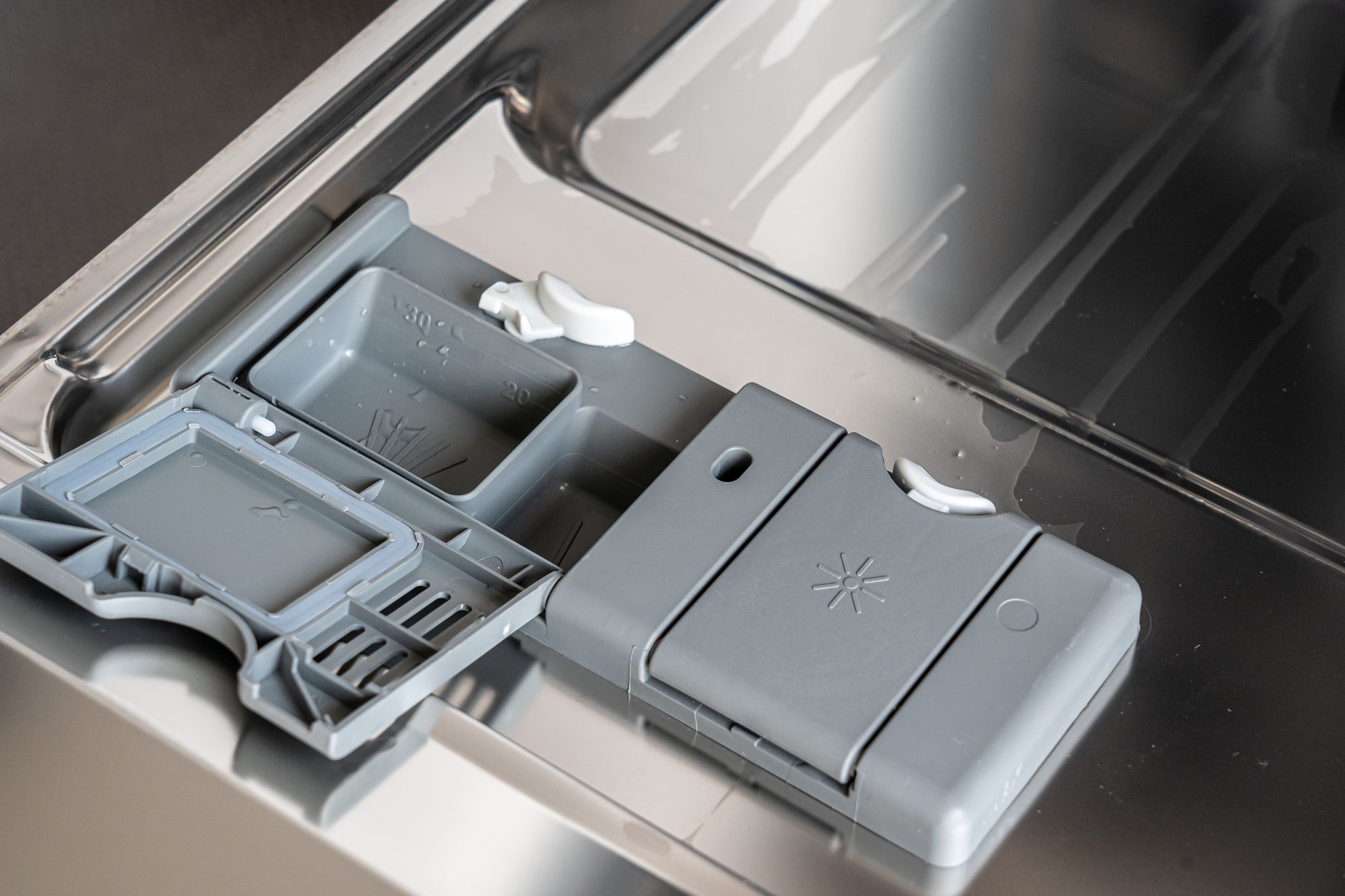
A seemingly clean dishwasher can harbor a hidden menace: mold.
This unwelcome guest can thrive in the warm, moist environment of your appliance, leading to unpleasant odors, unhygienic dishes, and even potential health concerns.
Mold spores can trigger allergies and respiratory issues in sensitive individuals.
Fortunately, tackling a moldy dishwasher doesn’t require a professional.
This guide will equip you with simple, effective DIY methods to banish mold and restore your dishwasher to its hygienic best, ensuring your dishes sparkle and your home remains healthy.
Table of Contents
Understanding Dishwasher Mold: Causes and Risks
Mold, a type of fungus, flourishes in damp, dark environments with a food source.
In dishwashers, the ideal breeding ground is created by trapped moisture from incomplete drying cycles, lingering food particles that evade the filter, and the residue left behind by detergents.
These elements create a perfect ecosystem for mold to take root and spread.
The health implications of living with a moldy dishwasher are not to be underestimated.
Inhaling mold spores can exacerbate allergies, leading to symptoms like sneezing, itchy eyes, and skin rashes.
For those with asthma or other respiratory conditions, exposure can trigger more severe reactions, including difficulty breathing and coughing fits.
Save this post for later 📩
Not ready to read it all now? Send it to yourself and come back whenever you're ready.
Beyond immediate discomfort, prolonged exposure to certain types of mold can contribute to more significant long-term health issues.
Beyond the health risks, mold can also wreak havoc on your dishwasher.
It can clog spray arms, leading to inefficient cleaning and leaving behind stubborn residue.
Over time, persistent mold can even degrade the rubber seals and interior components of your appliance, potentially shortening its lifespan.
Therefore, addressing mold promptly is crucial not only for your well-being but also for the longevity and optimal performance of your dishwasher.
Preparation and Safety Precautions
Before you embark on your mold-busting mission, it’s essential to prioritize safety.
The first and most critical step is to disconnect your dishwasher from its power source.
This eliminates any risk of electric shock while you’re working with water and cleaning solutions.
Mold spores can become airborne, and certain cleaning agents can be harsh.
To protect yourself, it’s highly recommended to wear protective gear.
Rubber gloves will shield your hands from direct contact with mold and cleaning chemicals, while a face mask will prevent you from inhaling potentially harmful spores or fumes.
Gathering your supplies beforehand will ensure a smooth and efficient cleaning process.
You’ll likely need white vinegar, baking soda, a bleach solution (used with extreme caution), rubber gloves, a face mask, a sponge, a scrub brush (an old toothbrush works wonders for tight spots), and a few dishwasher-safe bowls or containers.
Step-by-Step Instructions
- Turn off the power to your dishwasher at the circuit breaker.
- Unplug the dishwasher to ensure no electrical hazards.
- Wear rubber gloves to protect your hands from mold and cleaning solutions.
- Consider wearing a face mask to avoid inhaling mold spores.
Cleaning the Dishwasher Interior
Begin by removing all movable parts from your dishwasher.
This includes the racks, cutlery basket, and any removable spray arms.
Taking these out allows you to thoroughly clean them individually and provides better access to the interior.
Once the removable parts are out, it’s time to tackle the interior.
Pay close attention to the door seals, as mold often accumulates in these crevices.
Use a damp cloth or sponge to wipe down the walls, the inside of the door, and the gasket around the opening.
For stubborn mold spots, a scrub brush can be very effective.
Several cleaning solutions can be used for the interior.
White vinegar is a powerful natural disinfectant and deodorizer.
Alternatively, a diluted bleach solution (one part bleach to ten parts water) can be used for more stubborn mold, but never mix bleach with vinegar.
For a milder approach, a paste of baking soda and water can be effective for scrubbing.
Step-by-Step Instructions
- Remove dishwasher racks and spray arms.
- Soak racks and spray arms in a solution of hot water and dish soap or vinegar.
- Use a toothbrush or small brush to scrub away mold from nooks and crannies.
- Wipe down the interior walls, door, and rubber seals with a mold-killing solution.
- Rinse all cleaned parts thoroughly.
Method 1: Using White Vinegar
White vinegar is a fantastic natural cleaner due to its acetic acid content, which effectively breaks down mold and mildew, while also neutralizing odors.
It’s a safe and eco-friendly alternative to harsh chemicals.
To use vinegar for a deep clean, start by ensuring your dishwasher is empty.
Place a dishwasher-safe bowl or cup containing 1-2 cups of undiluted white vinegar on the top rack.
Close the door and run the dishwasher on its hottest water cycle.
The hot water will help to vaporize the vinegar, allowing it to circulate and kill mold spores throughout the appliance.
After the cycle is complete, open the door and check for any remaining mold.
If you find any stubborn spots, you can tackle them with a cloth dampened with more vinegar.
Step-by-Step Instructions
- Pour 1-2 cups of white vinegar into a dishwasher-safe bowl or cup and place it on the top rack of the empty dishwasher.
- Run the dishwasher on a hot water cycle.
- After the cycle, check for any remaining mold and spot clean if necessary with a vinegar-soaked cloth.
Method 2: Using Baking Soda
Baking soda is a versatile cleaning agent known for its mild abrasive properties, which help to scrub away grime and mold without damaging surfaces.
It’s also an excellent natural deodorizer, helping to eliminate any musty smells left behind by mold.
To utilize baking soda’s cleaning power, sprinkle about 1 cup of baking soda generously over the bottom of your empty dishwasher.
Close the door and run the appliance on a short, hot water cycle.
Save this post for later 📩
Not ready to read it all now? Send it to yourself and come back whenever you're ready.
The abrasive action of the baking soda combined with the hot water will help to lift mold and residue from the interior.
Once the cycle is finished, use a damp cloth to wipe away any remaining mold or loosened residue.
You’ll likely notice a fresher, cleaner smell.
Step-by-Step Instructions
- Sprinkle about 1 cup of baking soda on the bottom of the empty dishwasher.
- Run the dishwasher on a short, hot water cycle.
- Wipe away any residual mold or residue with a damp cloth.
Method 3: Using a Bleach Solution (with caution)
Bleach is a powerful disinfectant and can be effective against stubborn mold.
However, it is a harsh chemical and must be used with extreme care.
It should only be used when other methods have failed and never mixed with vinegar or ammonia, as this can create dangerous toxic fumes.
Ensure your kitchen is well-ventilated when using bleach.
To use bleach, make sure the dishwasher is completely empty.
Place 1 cup of chlorine bleach in a dishwasher-safe container (like a bowl or cup) and place it on the top rack.
Run a hot water cycle.
After the cycle, it’s crucial to let the dishwasher air out thoroughly for at least an hour, or even longer, before the next use to dissipate any residual fumes.
Important: Never mix bleach with vinegar or ammonia, as this can create toxic fumes.
Step-by-Step Instructions
- Ensure the dishwasher is empty.
- Place 1 cup of bleach in a dishwasher-safe container on the top rack.
- Run a hot water cycle.
- After the cycle, air out the dishwasher thoroughly before the next use.
- Important: Never mix bleach with vinegar or ammonia, as this can create toxic fumes.
Cleaning the Dishwasher Filter and Drains
The dishwasher filter and drain are often overlooked but are prime spots for mold and food debris accumulation.
A clogged filter prevents proper drainage, leading to standing water where mold can thrive.
Locate your dishwasher’s filter, usually found at the bottom of the interior.
Consult your user manual if you’re unsure of its exact location or how to remove it.
Once removed, rinse it thoroughly under warm running water.
Use a scrub brush to dislodge any trapped food particles and mold.
For the drain, you can carefully pour boiling water down it to kill any lingering mold or bacteria.
Alternatively, a diluted bleach solution (following the caution in the previous section) can be used for a more thorough disinfection.
After cleaning, reassemble the filter securely.
Step-by-Step Instructions
- Locate and remove the dishwasher filter (refer to your user manual if needed).
- Rinse the filter under warm running water, using a brush to remove any food particles and mold.
- Pour boiling water or a bleach solution (following caution from previous section) down the drain to kill any lingering mold or bacteria.
- Reinstall the clean filter.
Preventing Future Mold Growth
Prevention is key to keeping your dishwasher mold-free.
After each wash cycle, take a moment to wipe down the inside of the door and the rubber seals with a dry cloth.
This simple step removes residual moisture that mold loves.
Always leave the dishwasher door slightly ajar after a cycle has finished.
This allows for proper ventilation, letting any remaining moisture escape and preventing the humid environment that mold requires to grow.
Save this post for later 📩
Not ready to read it all now? Send it to yourself and come back whenever you're ready.
Before loading dishes, scrape off any large food scraps.
While dishwashers are designed to handle some residue, excessive food particles can clog the filter and drain, creating a food source for mold.
It’s beneficial to run your dishwasher regularly, even if it’s not completely full.
This prevents water from sitting stagnant in the bottom, which can contribute to mold growth.
Make a habit of cleaning your dishwasher filter at least once a month.
This simple maintenance task will go a long way in preventing debris buildup.
Aim for a deep clean using vinegar or baking soda at least once a month.
This proactive approach will tackle any early signs of mold or odor development.
Periodically check your dishwasher for any signs of leaks or drainage issues.
Addressing these problems promptly will prevent water from accumulating and creating a breeding ground for mold.
Step-by-Step Instructions
- Wipe down the dishwasher door and seals after each use to remove excess moisture.
- Leave the dishwasher door ajar after cycles to allow for proper ventilation.
- Scrape food scraps from dishes before loading to prevent debris buildup.
- Run the dishwasher regularly, even if it’s not full, to prevent stagnant water.
- Clean the dishwasher filter at least once a month.
- Perform a deep clean with vinegar or baking soda monthly.
- Check for and address any leaks or drainage issues promptly.
Conclusion
A mold-free dishwasher is essential for maintaining a hygienic kitchen and ensuring the cleanliness of your dishes.
By following these simple and effective cleaning methods, you can successfully eliminate mold and prevent its return.
Taking the time for regular maintenance not only protects your health but also extends the life of your appliance.
We’ve covered how mold forms in dishwashers, the associated health risks, and detailed step-by-step instructions for cleaning using natural methods like vinegar and baking soda, as well as a cautious approach with bleach.
We’ve also emphasized the critical importance of cleaning the filter and drains, and most importantly, provided actionable strategies for preventing mold from ever becoming an issue again.
Incorporate these practices into your regular home maintenance routine.
A clean dishwasher is a small effort that yields significant rewards in terms of health, hygiene, and appliance longevity.
Happy cleaning!.